

Configuring versioning#
Before you can use the “Versioning” feature, you must configure the relevant workspace types, item types and workspaces accordingly.
Step 1: Configure the workspace type for versioning#
In the first step, you enable the “Versioning” feature for the desired workspace types.
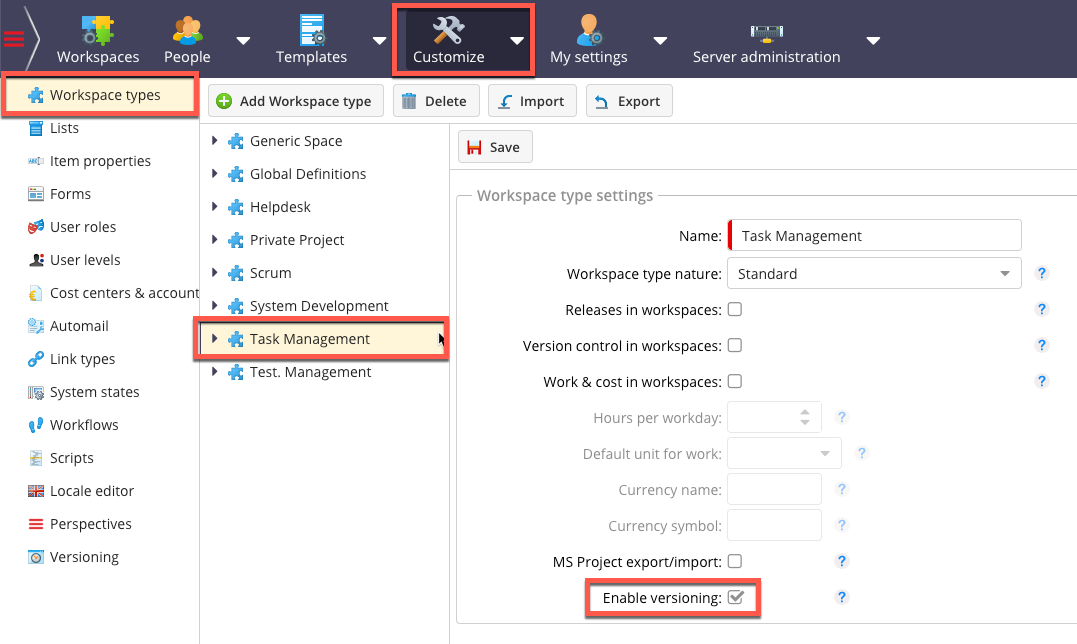
Enabling versioning for a workspace type#
Implicit versioning means that the child items of a document automatically receive a new version whenever the document itself receives a new version. Typically, this affects document sections and embedded items. New versions of such items cannot then be created directly (explicitly), but only indirectly through the (explicit) creation of a new version of the parent document.
Step 2: Configure the item types for versioning#
In the second step, you define for each affected workspace type and item type which item attributes are to be versioned and by which method (explicit or implicit).
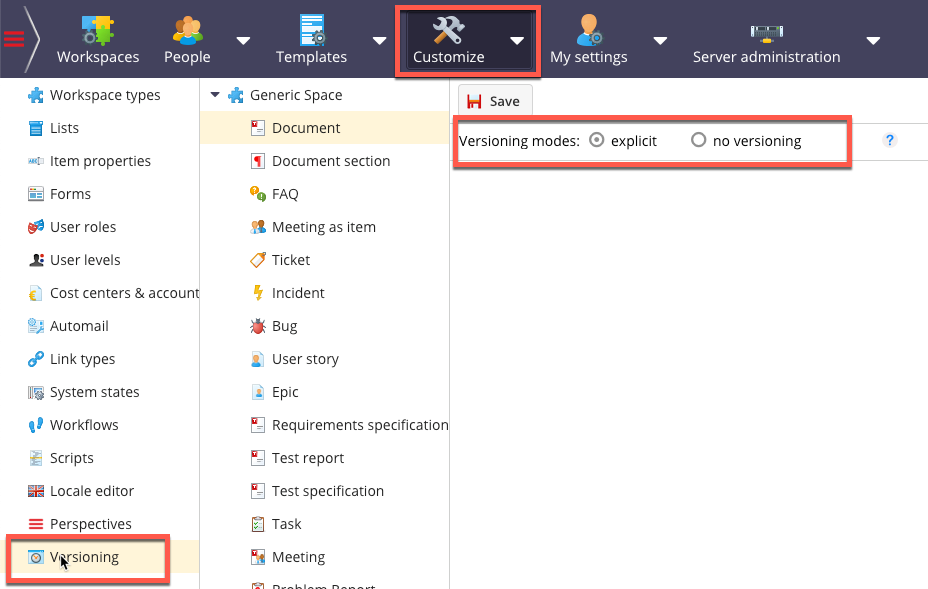
Configuring item types for versioning#
Implicit versioning means that the child items of a document automatically receive a new version whenever the document itself receives a new version. Typically, this affects document sections and embedded items. New versions of such items cannot then be created directly (explicitly), but only indirectly through the (explicit) creation of a new version of the parent document.
As with other settings, the versioning settings are inherited downward toward the more specific configurations.
Step 3: Configure the workspace for versioning#
In the final configuration step, you enable versioning for a specific workspace.
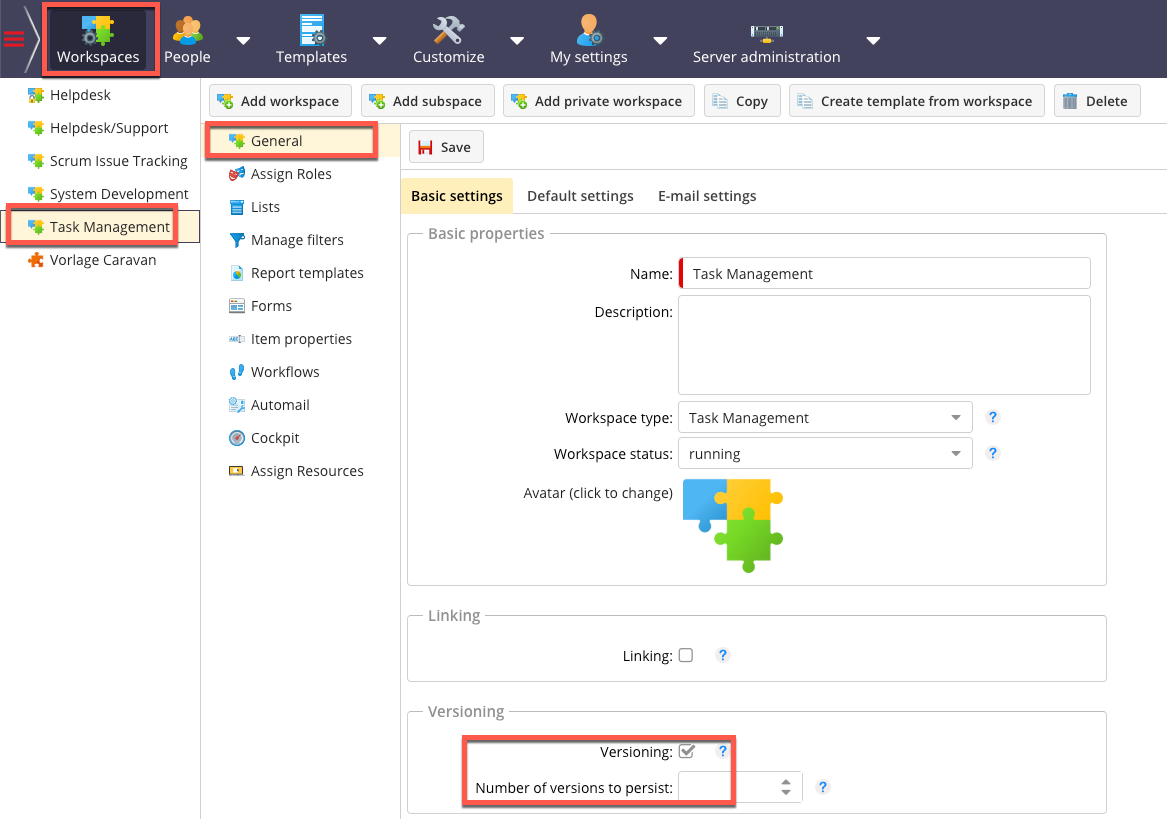
Configuring a workspace for versioning#